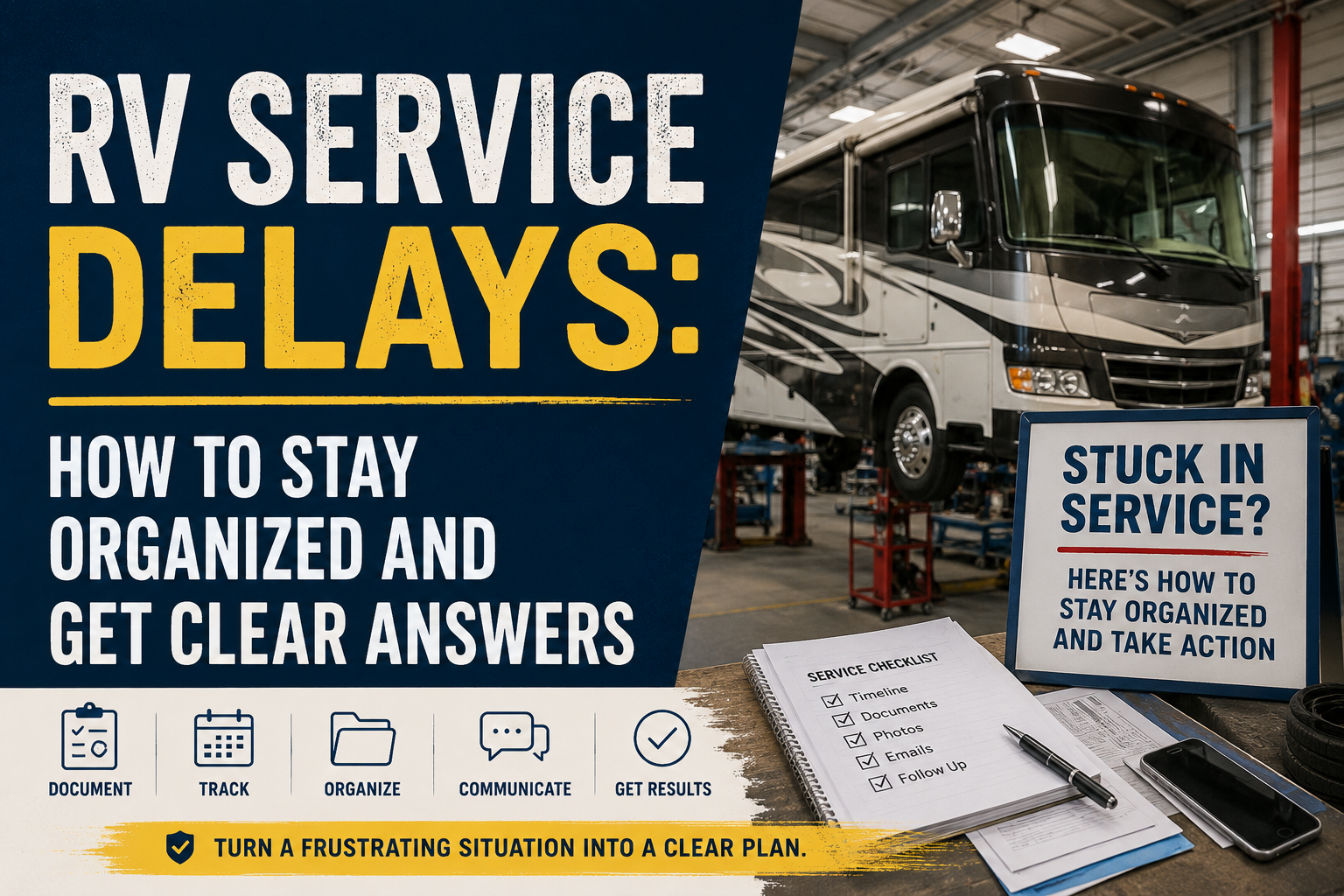
Owning an RV is supposed to make life freer and more flexible. You buy it for weekends away, national park trips, and quiet mornings outside. But any RV owner knows there is another side to ownership: service delays, warranty confusion, parts "on order," calls that don't get returned, and a loop between the dealer and manufacturer where weeks pass with no resolution.
After owning travel trailers and a camper van, one thing stands out clearly: the biggest problem in most RV service situations is not the repair itself. It is the lack of organization around it. When everything is scattered across texts, emails, service tickets, photos, and half-remembered conversations, getting a straight answer becomes much harder than it needs to be.
Why RV Service Delays Are Often a Communication Problem
RVs are complicated products — part vehicle, part home, part plumbing system, part electrical system. Things break. Even new RVs have problems. The bigger frustration typically comes after the issue is reported.
A typical service delay looks like this:
- You drop the RV off at the dealer
- The dealer says they need manufacturer approval
- The manufacturer says they're waiting on the dealer
- Someone says parts were ordered; someone else says they weren't
- You call for updates and get vague answers
- A few more weeks pass
At some point, you are no longer just dealing with a broken RV. You are managing a case — and that is exactly where most owners get stuck.
Why Documentation Makes the Difference
When you're frustrated, the instinct is to call and push harder. Sometimes that works. But over time, written organization matters more than pressure. A clear written record lets you explain:
- What happened and when
- Who you contacted and what they said
- What repairs were attempted
- What documents and photos support the issue
- Exactly what outcome you are asking for
Dealers and manufacturers handle a lot of customers. A scattered or emotional case is easier to lose track of. An organized, dated, evidence-backed case is much harder to ignore.
Don't Build This From Scratch
The RV Service Escalation Kit at rvservicekit.com helps you organize your timeline, documents, photos, and follow-up emails into one clear packet — ready to use with any dealer, manufacturer, or warranty provider.
Get the RV Service Escalation KitWhat to Keep in One Place
Your RV Service File — Keep All of This Together
- Purchase documents and bill of sale
- Warranty information and coverage terms
- All service invoices and repair orders
- Photos and videos of every issue
- Emails with the dealer and manufacturer
- Text messages if relevant
- Names of every person you spoke with
- Dates and notes from every phone call
- Parts delay and authorization updates
A folder on your computer or Google Drive is enough. The goal is not to build a legal case — it is to have a clear written record so you are not relying on memory six weeks into a delay.
Build a Simple Timeline
A timeline turns a messy situation into something any manager, manufacturer rep, or service advisor can understand in two minutes. It also surfaces gaps immediately — if two weeks passed with no contact, you can point to that clearly.
Example Service Timeline
Always Ask for Written Updates
Phone calls are useful but disappear fast. After every important call, send a short follow-up email to confirm what was said. Something like:
This does two things: it creates a record, and it gives the other party a chance to correct anything before it becomes a bigger issue later.
Be Specific About What You Want
A lot of RV owners get stuck because they express frustration without making a specific request. Instead of only saying "this has taken too long," ask for something concrete:
- A written repair status with current progress
- The exact date warranty authorization was submitted
- The date parts were ordered and from where
- An expected parts arrival date
- An expected repair completion date
- A direct manufacturer case number
- A supervisor or escalation contact
You may not get every answer immediately. But a specific request is far easier to respond to than general frustration — and it signals that you are organized and serious.
When to Escalate — and How
Escalation does not have to mean a confrontation. It simply means moving the issue to the next appropriate person when the normal process isn't working. Consider escalating when:
- Your RV has been sitting for weeks without a clear written update
- You keep getting different answers from different people
- Warranty coverage is denied without a clear written explanation
- The same issue has been repaired more than once
- There is a safety concern
- No one will confirm the current status in writing
Keep the Tone Professional
This is harder than it sounds when your RV has been sitting for weeks and nobody seems to own the problem. But a calm, organized message consistently outperforms an angry one. You want to come across as someone serious, prepared, and reasonable — not someone venting.
The goal is to make it as easy as possible for the dealer, manufacturer, or service manager to understand the issue and respond. The easier you make their job, the faster your RV comes back.
RV Ownership Is Easier When Your Records Are Organized
Most RV owners learn this the hard way. The more complicated the RV, the more the paperwork matters. You may never need to escalate a service issue. But if you do, organized records save time, reduce stress, and help you communicate with the clarity that gets results.
RV ownership comes with maintenance — that's unavoidable. But confusion, missing records, and vague communication don't have to be part of the experience.
Your RV Is Stuck. Here's How to Take Action.
The RV Service Escalation Kit walks you through organizing your full service timeline, repair history, photos, and communications into a clear, professional packet — so you can follow up with confidence instead of frustration.
Build Your Escalation Kit at rvservicekit.com